two cucumber slices
Why good health advice doesn't work, and what did
My co-founder Nickhil spent years writing a health blog. It was good. It had clear and simple posts about food, sleep, and blood sugar.
But then, he noticed something odd. Readers loved the posts, and then did nothing. The most common reaction was some version of "What an amazing guy."
We wanted people to think that they can do this too. But they thought only he can do this. Good advice had turned health into something you watch someone else do.
So we tried something different.
Consider, for a moment, that there are two people inside you. One person reads the health advice, and the other person follows it.
The reader is the "10am You": rested, coffee in hand, full of good intentions. 10am You reads about fibre and thinks, "I'm going to eat a salad."
The one who has to actually do it is "10pm You": tired, standing at the open fridge, eyeing a leftover brownie.
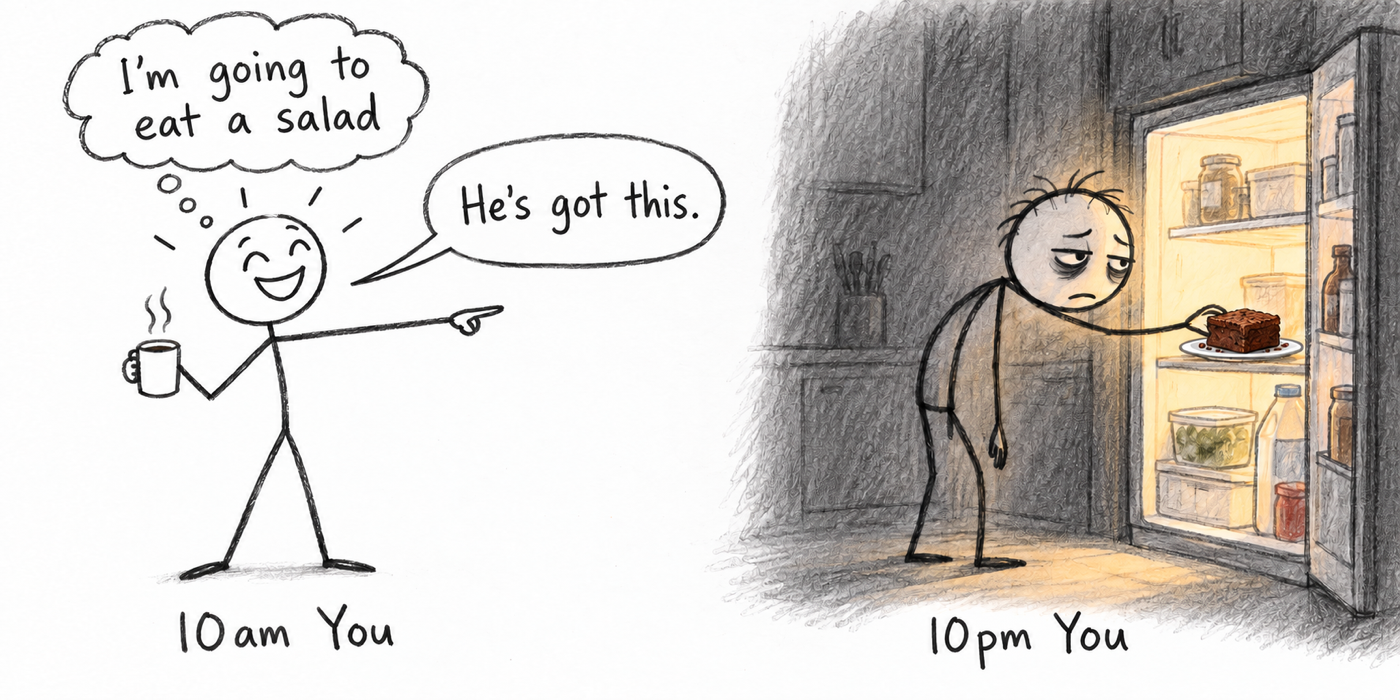
Almost all advice is written for '10am You'. But '10am You' isn't the one eating dinner.
So we set one rule: Every habit has to be easy enough for the '10pm You' on a bad day.
We built a 28-day program on WhatsApp where you learn four habits, one new one each week: salad before meals, a walk after meals, more protein, and more water.
Nothing on that list is new. But the list was never the problem. Following it was.
So we made this program that made you start almost embarrassingly small. So day 1 of the first habit would look something like this: Before lunch or dinner, eat two slices of cucumber, carrot or tomato.
Day 1 of walking would look something like this: 50 steps after a meal. Then a little more each day, until by the end of the week, it's a five-minute walk after dinner with someone you love.
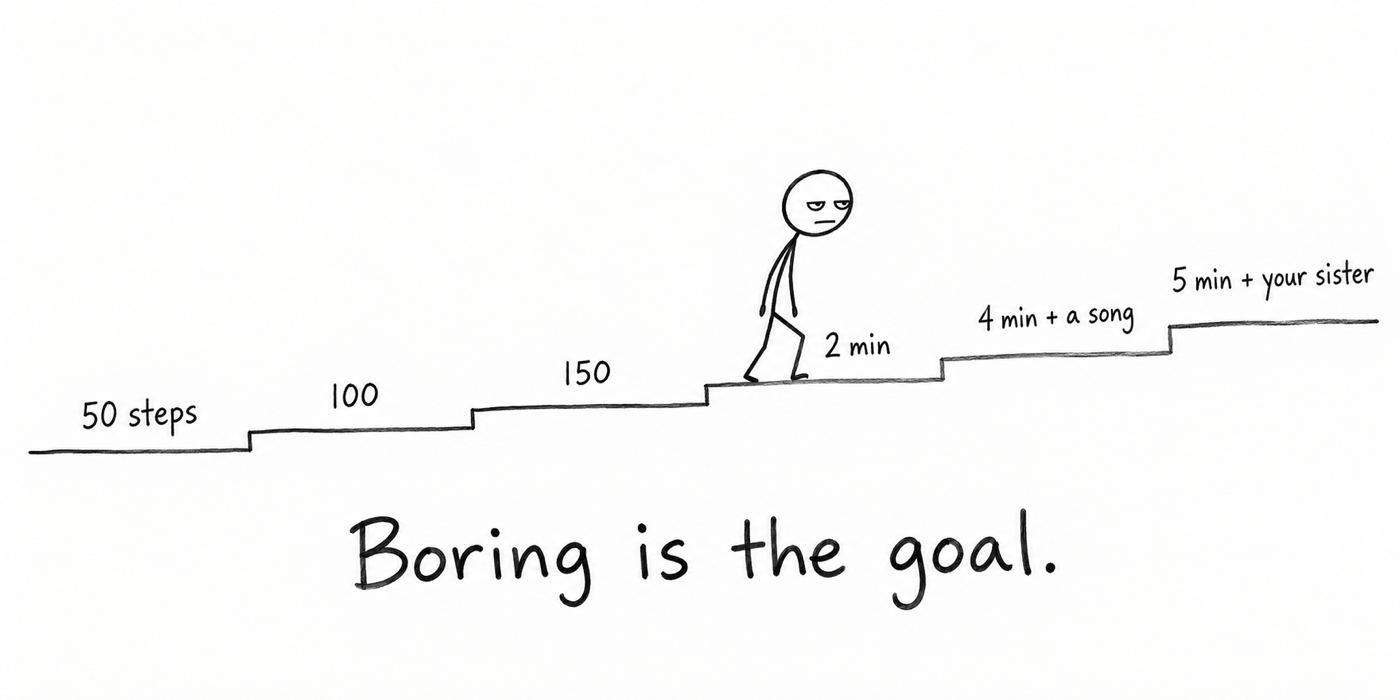
People laugh at day 1. That's fine. Someone who's laughing isn't resisting. The early days aren't about cucumbers. They're about getting a "yes" from the '10pm You', and then a slightly bigger yes the next day.
None of this is my invention, though. BJ Fogg's Tiny Habits and James Clear's Atomic Habits made the case years ago. What I can add is what happened when about 120 people tried it. Two things surprised us.
Paying made people show up. When people paid with their own money, they showed up.
Change spread to the whole family. A retired banker in his late 50s told us that seeing everyone's plates made the group feel "like one family," which motivated him to eat better, which in turn motivated his wife and daughter to eat better.
This isn't a scientific study. It's ~200 people who chose to join and told us how it went over the many iterations. And the most common thing they report isn't weight loss but that their cravings went away. And many say they're still doing the habits months later. That's the part I find most meaningful.
Here's what I posit: For most of history, the hard part of getting healthy was knowing what to do. You needed a doctor, a book, or someone who knew.
That problem is basically solved. Any question about food or health now gets a great answer.
But Nickhil's blog showed us that more information can also make things harder. It turns "eat better" into a big project, and big projects are confusing. More information can also be expensive (think pricy GLP1s, longevity programs, and full-body scans).
So as knowing gets easier, the valuable thing becomes taking the first step. A first step so small that the tired 10pm version of you will take that step anyway.
Introducing the 28 Day Challenge, which helps you start with the first step: Two cucumber slices.
Check out try28.com.
Cheers,
Abhinav